
Three enduring philosophies that help leaders cultivate character, navigate uncertainty, and unite people around a shared purpose.
Over more than 2,700 years, Japan has developed a rich set of cultural and philosophical traditions. Translated into the language of corporate management, they speak directly to problems that keep modern leaders awake at night: how to hold a course when markets buckle, how to stay composed under pressure, and how to keep diverse teams working together without flattening what makes them different.
In a previous article, we introduced kokorozashi, the idea of a leader's guiding aspiration. If kokorozashi is the destination, these three concepts help leaders reach it. Dō (the Way) shapes how they develop each day. Zen helps them stay clear when the path becomes uncertain. Wa (Harmony) determines how they bring others with them.
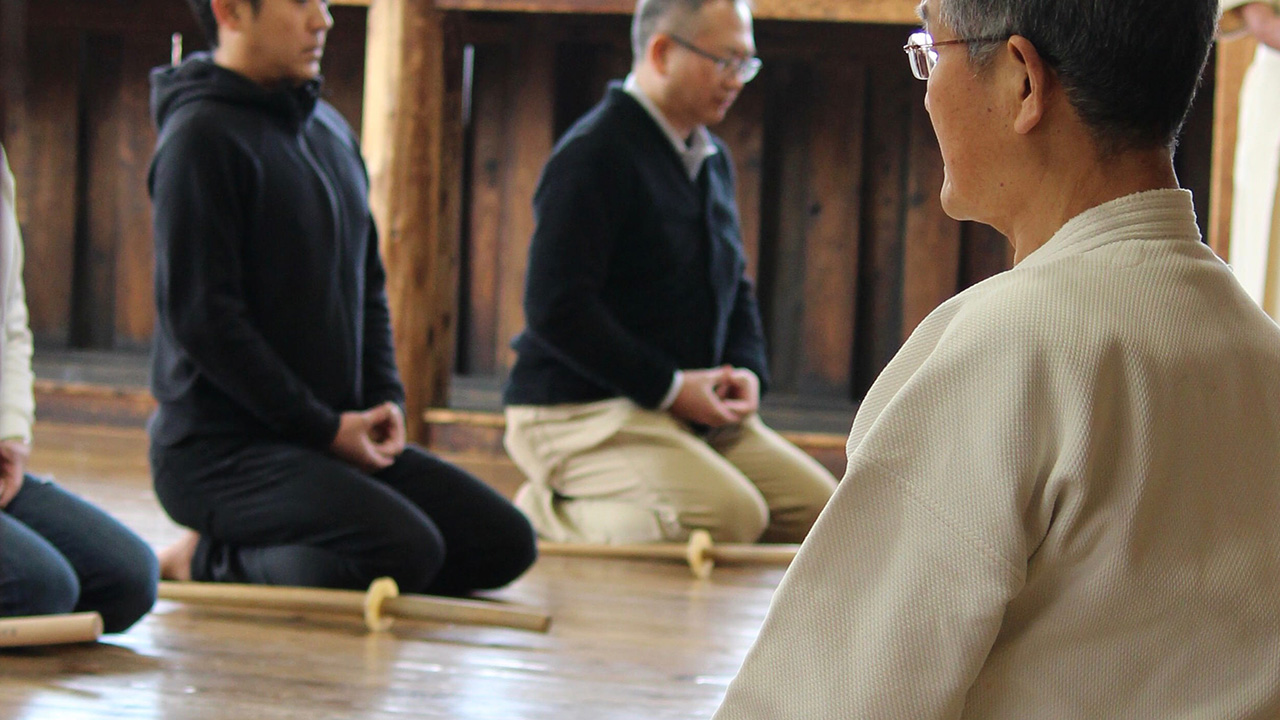
In the Japanese martial and contemplative arts, Dō refers to the lifelong cultivation of character through disciplined practice. The goal is to balance mind, technique, and body (Shin-Gi-Tai).
Bringing the spirit of Dō into business changes how an organization operates. A company guided by the spirit of Dō stops asking "Did we hit our numbers?" as its primary question and starts asking "Why do we exist, and are we living up to that reason?" Short-term targets still matter, of course. But they become waypoints on a longer journey rather than the journey itself.
When that shift takes root, an organization becomes harder to destabilize. Even in the unpredictable VUCA era, an organization anchored to an enduring purpose can absorb shocks without losing direction, balancing long-term social and economic value instead of lurching from one quarterly priority to the next.
In the world of Dō, no matter how skilled (Gi) or energetic (Tai) you are, you cannot be a true master without a good heart and strong morals (Shin).
Likewise, in business, a leader who is highly skilled but arrogant and selfish will eventually ruin a team.
When companies ground their leadership development in Dō, they give character and human depth the same weight as business competence. Leaders who visibly commit to refining their own Shin-Gi-Tai build deep trust with their teams, creating a safe and supportive workplace for everyone.
In Dō, making a mistake or being unrefined is not something to be ashamed of. It is simply a necessary step to learn and improve.
In today's fast-changing business world, mistakes are bound to happen when trying new things. When leaders stop treating failure as a "loss" or something to punish and instead view it as a valuable lesson for growth, the company culture changes completely. Employees feel safe to take risks and keep trying, which naturally leads to creative ideas and innovations.
The spirit of Dō, then, asks leaders to shift their orientation from Doing (winning) to Being (contributing). In an age where AI can optimize for efficiency with ruthless precision, that shift toward authentic, empathy-driven leadership may be the most valuable thing a human leader can offer.

Zen is often misunderstood as a religious tradition. It is better understood as practical wisdom for regulating the self, and it speaks directly to the conditions leaders face today: too much information, too many choices, too little clarity.
While average managers try to fix problems by adding more rules, more tools, or more projects, a leader with Zen wisdom does the opposite. They figure out what truly matters and cut away the rest. By keeping your business strategy simple, your team can focus its energy and move quickly without getting confused, even in a chaotic market.
Steve Jobs did exactly this when he slashed Apple's product lineup to a handful of essentials. The clean design Apple became famous for reflects the same instinct. Most of us can feel the difference when we pick up the product.
In Zazen (seated meditation), the rule is simple: fix your posture (Chōshin: 調身 or “regulate the body”), slow down your breath (Chōsoku: 調息or “regulate the breath”), and your mind will naturally become calm (Chōshin: 調心 or “regulate the mind”). This is a very practical way to manage stress. Instead of forcing your mind to stop worrying, you control what you can, your body and your breathing. This calm attitude can make the entire team feel safe.
Zen teaches us that we are not isolated individuals; we are all deeply connected to each other and to the world around us. In business, this means looking at employees, customers, and society not as tools to make money, but as partners in the same journey.
This connects directly to modern sustainability and purpose-driven management, moving beyond old-fashioned capitalism that only cares about profit. When a leader treats employees as true partners, it builds deep loyalty and trust. Furthermore, by treating society and the environment with respect, the business grows into an organization that genuinely helps the world.
The wisdom of Zen — finding the essence by keeping things simple, staying calm during tough times, and leading with a good heart — is a leader's best tool for building a strong, authentic company.

Wa means valuing teamwork and harmony over individual egos. It is the ability to bring people together, resolve disagreements, and find common ground. This value can helps modern leaders in numerous practical ways.
Diverse teams, people of different nationalities, generations, and specialisms, are indispensable in modern management. But diversity alone produces nothing if individual egos simply collide.
A leader guided by Wa does not treat disagreement as a contest over who is right. They treat differing opinions as raw material for a superior third option: an integrated solution that none of the individual perspectives could have reached alone.
At the root of Wa lies deep respect and a commitment to listening. Hearing the other person first, for the sake of the whole, rather than forcing a position through. Under a leader who embodies this, team members feel a strong conviction that their opinions will not be dismissed. This is psychological safety in its most concrete form. Consensus built through genuine dialogue cultivates buy-in that autocratic, top-down leadership never can, and the engagement that follows sustains organizations through difficult periods.
If you apply Wa to the whole business, it means looking at your company, your customers, your employees, your suppliers, and the planet as one big, connected family. This matches the traditional Japanese business idea called Sanpo-Yoshi, which means: "Good for the seller, good for the buyer, and good for society."
Competitors are not always enemies to be crushed. Sometimes the right move is collaboration that advances an entire industry. This orientation toward social harmony is what allows a company to earn lasting trust and achieve sustainable management across decades.
The spirit of Dō, the wisdom of Zen, and the value of Wa have been shaped by Japan's long history, but they offer timeless lessons for modern leadership. In a world where AI can handle logic and efficiency perfectly, human leaders are needed to bring diverse people together and create a warm, unified harmony (Wa).
We sincerely hope that the Visionary Leadership Program gives leaders from all over the world a wonderful opportunity to rethink their approach, enrich their skills, and become true pioneers who lead with a clear vision and a high purpose.

Dō, Zen, and Wa are central to GLOBIS's Visionary Leadership Program, a five-day immersive experience in Japan for senior professionals navigating the AI era. Drawing on GLOBIS's leadership development expertise and Japan's management philosophy, the program helps participants deepen their kokorozashi and develop the mindset and capabilities to lead with purpose and lasting impact.
To explore these ideas further, read "Redefining Visionary Leadership in the Age of AI" and "What Guides Your Decisions When the Path Isn't Clear?", which introduce GLOBIS's leadership philosophy and the concept of kokorozashi.
Learn more about the Visionary Leadership Program

Hideo Nakashima
Manager / Faculty member at GLOBIS
Currently, he is involved in global BtoB marketing, organizational and human resource development consulting for global companies at GLOBIS. Besides, as a member of the faculty group, he is engaging in content development and lecturing, focusing on management strategy, marketing, leadership, and technovate areas. Prior to joining GLOBIS, he was engaged in industrial parts sales and new business promotion at a general electronics manufacturer, support for strengthening corporate organizational capabilities through knowledge management at an IT vendor, and consulting on M&A/alliances, internal control construction, etc. at an investment company. He is also the Co-author of ``[New Edition] MBA Management Strategy'' and ``MBA Management Book II'' (both published by Diamond).


Every organization's needs are different. With our global learning options, we're ready to help you find the right program to achieve your talent development goals.


.jpg&w=3840&q=75)


