
Why the shift to L&D product management is the most important move your team can make right now.
The era of the "one-and-done" corporate training workshop is officially over.
That realization ran through three days of sessions at ATD 2026 in Los Angeles, threaded between the bigger conversations about AI and automation. Employees have spent 15 years inside apps designed around their behavior. They know what responsive, personalized, adaptive design feels like. A two-day compliance workshop does not feel like that, and they know it.
For L&D teams, the question is no longer whether to change. It is whether to lead the change or be dragged through it. The answer requires shifting the fundamental unit of the work: from training program to learning product, built the way a software company builds something to solve a real user problem.
A training program has a start date, an end date, and a completion rate. Once it runs, it is over. Success means everyone attended and passed an assessment. Whether the business problem it was designed to address actually changed is often beside the point.
A learning product has users, not attendees. It has a specific business problem to solve, a KPI it is trying to move, and a feedback loop that keeps it alive. It is never "finished," any more than a mobile banking app is finished. It ships, it gathers data, it iterates.
Consider a compliance program versus a compliance product. The program runs every January for six weeks, then disappears. The product integrates into onboarding, surfaces relevant content at the moment of risk, and tracks behavior change rather than course completion. One asks: did everyone finish? The other asks: did the problem get smaller?
Understand product thinking: Sho Kuwamoto on Market Entry and Product Sense on GLOBIS Unlimited — Figma's VP of Product on how software shifted from one-off delivery to continuous cloud services. The practitioner case for the argument above.
The first step in building a learning product is refusing to start with content. Start with a business outcome and work backwards.
Pick a KPI the business cares about: time-to-competency for new hires, error rate on a specific process, customer satisfaction scores tied to frontline interactions. Then identify what behaviors would move that number, and what gaps in knowledge, skill, or habit are causing the problem. Content comes last.
Liz Wiseman, whose research on leadership under uncertainty closed out ATD 2026, frames this as the difference between solving the problem yourself and framing it well enough for others to solve. Her context is leadership — but the principle applies directly to L&D design: stop designing programs for learners. Design with them, and give them ownership of the outcome. Wiseman's term for the leader's move in this moment is handing back the pen.
This also means building feedback into the product from the start — not as an end-of-course survey, but as a continuous signal. Behavioral data, manager observations, business metrics. A learning product that cannot tell you whether anything changed in the business is not a product yet.
Measure what matters: Business Analytics: Hypotheses and Perspectives on GLOBIS Unlimited — how to build the quantitative framework that tells you whether the intervention is actually moving the number you care about.
Will Guidara took Eleven Madison Park from a technically accomplished two-star restaurant to the number one restaurant in the world — not through a single innovation, but by mapping every touchpoint in the guest experience, from the moment a customer considered a booking to weeks after the meal ended, then systematically improving the least obvious ones.
Most L&D programs focus on the obvious touchpoints: the onboarding workshop, the annual performance training, the leadership course. But the learning experience extends far beyond those events. It includes the manager conversation the Monday after a session, the job aid at the moment of need, whether new skills get reinforced in team meetings or quietly abandoned.
Guidara mapped 130 touchpoints in his restaurant. How many has your L&D team mapped in the learning journey it owns?
Iteration means continuous attention to all the moments where learning either takes hold or doesn't. It also requires dedicated resource. When Guidara invited his team to pursue unreasonable hospitality, enthusiasm was not enough. He added a role he called the Dream Weaver, someone with no operational responsibilities, just there to help everyone else bring their ideas to life. Nothing, he said, will ever take root in the absence of resource. The same holds for learning culture.
Zack Kass spent 16 years leading go-to-market at OpenAI. He came to ATD 2026 with a message that landed hard in that room: the skills organizations most desperately need right now — judgment, discernment, empathy, the capacity to navigate ambiguity and build trust — are precisely the capabilities that have historically been underfunded in corporate learning.
They are also the skills no algorithm can replicate. CEO after CEO is telling Kass the same thing: they need humans who can make calls machines cannot make for them. Traditional training programs are poorly designed to build those capabilities. They favor knowledge transfer over behavior change, and events over sustained practice.
Build the judgment: Critical Thinking: Strategic Problem Solving on GLOBIS Unlimited — structured frameworks for defining complex problems and evaluating solutions in volatile, high-stakes conditions.

The product management mindset is a discipline: define the user, define the problem, build to solve it, measure whether it worked, iterate. Taken seriously, it changes how L&D teams are resourced, how they measure success, and how they talk to the rest of the business.
Organizations that get this right will build learning cultures that are resilient, adaptive, and tied to real outcomes. The ones that don't will keep running workshops that everyone attends and no one remembers.
To see what productized, continuous learning looks like in practice, explore GLOBIS Unlimited — a platform designed to support ongoing human development at scale, at the pace the moment actually requires.
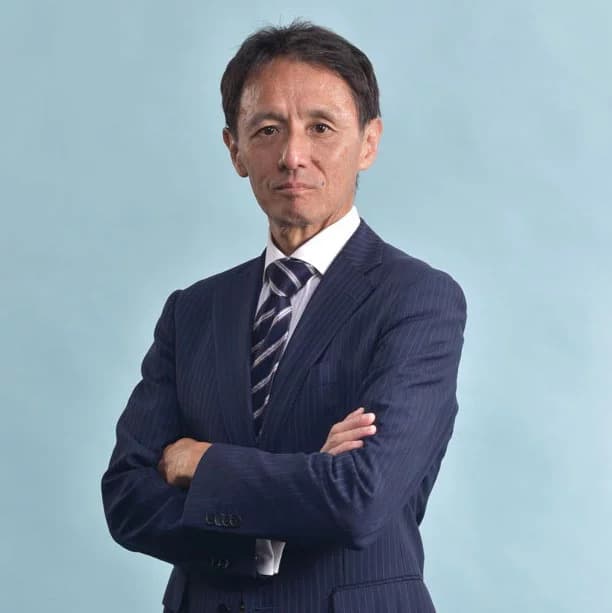
Takashi Kodaira
CSO/CFO
Takashi Kodaira began his career in the IT and telecommunications industry, where he served in managerial positions on multinational teams for sales, projects, and bids. While working in such diverse environments allowed him to experience both the joys and challenges of cross-cultural collaboration, it also showed him the critical importance of developing the skills of business professionals. Takashi later transitioned to GLOBIS Corporation, where he joined a specialized team responsible for driving global business expansion and played a role in realizing GLOBIS’s overseas initiatives. In 2018, he moved to Singapore, where he worked with international business schools and HR consulting firms before rejoining GLOBIS in 2024.


Every organization's needs are different. With our global learning options, we're ready to help you find the right program to achieve your talent development goals.
.jpg&w=3840&q=100)


