
If you are worried about the effect AI will have on L&D, now is the best time to add a human touch to your organization
The Association for Talent Development's International Conference and Expo is the world's largest annual gathering for corporate learning and development. At ATD 2026 in Los Angeles, the theme was "Embrace Disruption. Direct the Future," and it raised a question that every session circled back to: now that AI can supply knowledge, analysis, and technical problem-solving on demand, what is L&D actually for?
As AI evolves at a staggering pace, the fundamental questions of what it means to be human and how we should truly learn have become heavier and more urgent than ever before. The skills AI cannot replicate are judgment, empathy, and the capacity to act under genuine uncertainty. These are also the skills corporate training has historically underinvested in.
Three trends from ATD 2026 show what it looks like to start closing that gap.
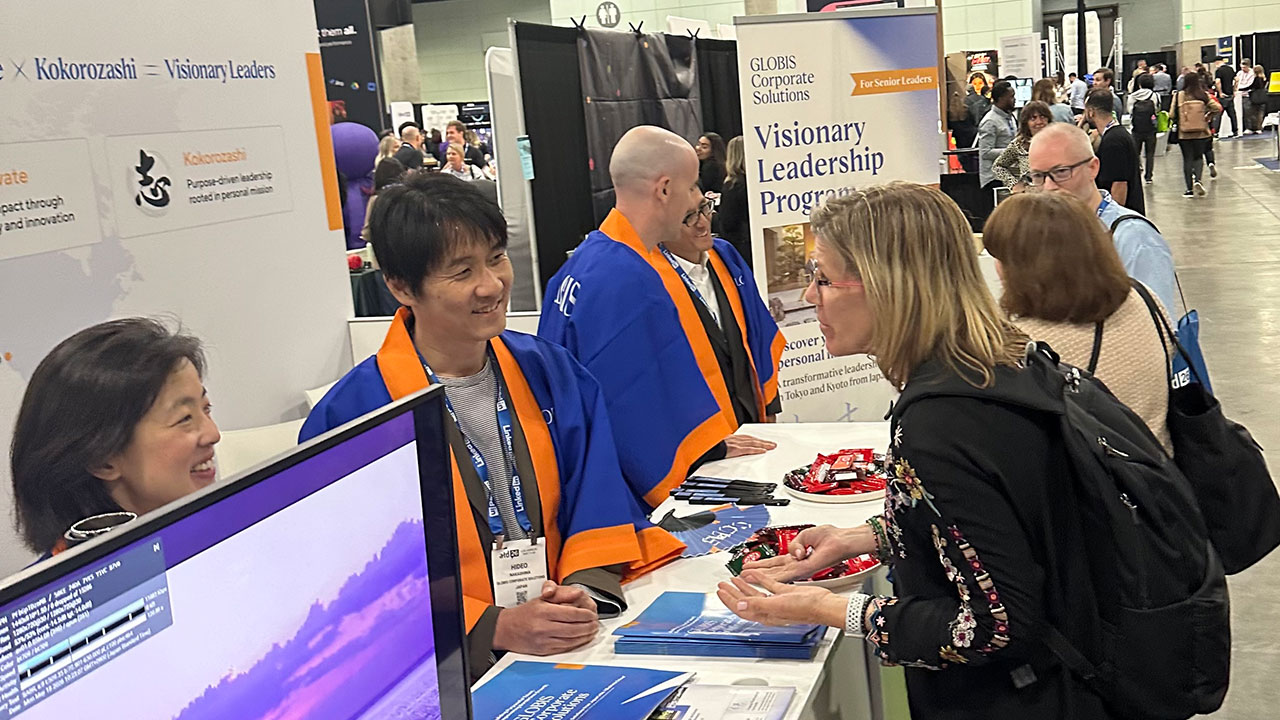
Historically, the American approach to business has relentlessly pursued the maximization of efficiency and growth, which has driven world-changing innovations like AI. This intense competitive environment has also bred burnout, anxiety, division, and a stark disconnect between daily work and purpose.
What struck me most deeply during the conference was the concept of "Identity Displacement." People who have long defined their self-worth through their specific jobs or roles are now feeling their very raison d'être shaken by the capabilities of AI.
In this disruptive environment, leadership researcher Liz Wiseman introduced the concept of the "Power Combo." In times of uncertainty, if an organization only trains its top leaders or places an excessive burden solely on the frontline, it becomes "wobbly" and inevitably falls into dysfunction. The key is for leaders and the frontline to evolve in tandem.
Wiseman explained that a leader's role is not to solve everything themselves, but rather to define the problem, design the constraints, and ultimately "give the pen back" to the frontline.
The ultimate differentiator in organizational design for the AI era will not be mere efficiency, but "Humanity." Zack Kass, a former OpenAI executive, opened the conference by arguing that AI is delivering what he called "Unmetered Intelligence": a near-limitless supply of knowledge and analytical capacity available on demand.
He shared a poignant story about his father, an oncologist, emphasizing that in an era where AI can instantly provide the optimal medical solution, the final and most critical value lies in "bedside manner": how one connects with and supports another human being. In any organization, human trust, empathy, and dialogue will become the core competitive advantage.
With AI rapidly commoditizing knowledge and intelligence, simply knowing "what to learn" is no longer enough to maintain a competitive edge. Kass even suggested that the correlation between a university major and economic success will likely weaken in the future. The most critical survival skill moving forward is to "learn how to learn."
AI will undoubtedly serve as a powerful learning partner, but true learning perhaps only begins after AI provides an answer. Instead of passively accepting AI's output, individuals must put it into practice, embrace trial and error, experience it with physical sensation, engage in dialogue with others, and create their own meaning. Only through this process does raw knowledge transform into true wisdom. First-hand experience is becoming more valuable, not less. Stepping outside the screen to collide with others, take risks, fail, and reflect: this is what human-centric learning looks like in the AI era.
Restaurateur Will Guidara called it "One Size Fits One": in an age where technical perfection is merely "table stakes," true differentiation comes from treating the person in front of you as a unique individual. Future learning design cannot rely on delivering uniform content; we must design each experience to align with the individual's learning style, values, aspirations, and stage of growth. Just as sports teams "go to the tapes" after a game, organizations must give employees individualized opportunities to reflect on their experiences, make sense of them, and translate them into action.
Amidst continuous disruption, leaders are constantly exposed to extreme pressure. They are expected to deliver results, drive AI transformation, make decisions in highly uncertain environments, and continuously upskill themselves. An organization cannot be sustainably driven forward by sheer willpower and pressure alone.
This is where "Self-compassion" becomes essential. This is not about self-indulgence or weakness; it is the resilience to face one's own limitations and imperfections without making an enemy of oneself, allowing for recovery and continuous forward momentum. In other words, it is the ability to make yourself your own greatest ally. In the AI era, humans will constantly find themselves compared to machines. Leaders need not only external achievements but also internal stability and resilience. Self-compassion is the foundational "Leadership Infrastructure" for the future.
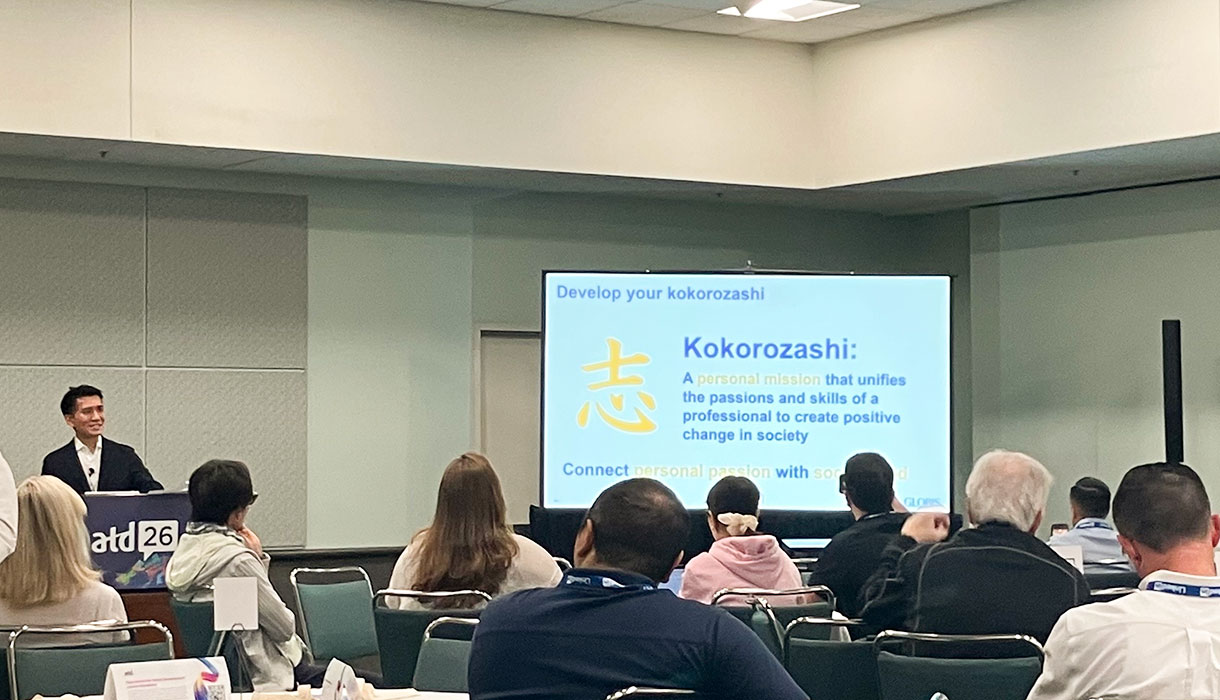
Building upon this inner strength is the concept of "Kokorozashi" (Personal Mission), a core philosophy at GLOBIS. Zack Kass stated, "Optimism is a moral obligation." This resonates deeply with my own belief that "pessimism is laziness, optimism is an act of will." Precisely because we live in an era of increasing uncertainty, we must ask ourselves: what kind of society do we ultimately want to realize? For what purpose, and for whom, are we taking on these challenges? This "Kokorozashi" will serve as the most vital compass for future leaders.
Looking across these three trends, it is clear that while AI will rapidly commoditize information and knowledge, the importance of human trust, compassion, and purpose will only grow. People learn from those they trust, gather in organizations they trust, and follow leaders they trust. The future of corporate learning must go beyond skills training to embrace the cultivation of humanity, relationships, and vision.
The most consequential shifts in corporate learning right now are not technical. They concern the human capacities AI cannot replicate, and the learning cultures strong enough to develop them. For L&D and HR professionals, this is the moment to claim a strategic seat at the executive table. By embracing these trends, we can direct the future rather than just reacting to it.
To explore these concepts further and future-proof your organization, I invite you to visit our website for more information or contact our team for a consultation today.

Yasuyuki Kato
President & CEO, GLOBIS USA, Inc.
After graduating from university, Mr. Kato joined a prominent general trading company in Japan, where he was engaged in global business projects based in China. He then joined a strategy consulting firm where he served as consultant for client companies wishing to expand overseas and develop new businesses. Prior to joining GLOBIS USA, he served as Vice President of GLOBIS China. As a corporate training instructor, he provides a variety of lectures on many topics, including corporate strategy, corporate philosophy, and overseas expansion strategies.


Every organization's needs are different. With our global learning options, we're ready to help you find the right program to achieve your talent development goals.


