
As L&D platforms converge on the same AI-driven features, the question of what actually differentiates learning has shifted from technology to meaning.
In May, nearly 7,000 L&D professionals from 80 countries gathered at ATD 2026 in Los Angeles. The first thing you notice walking the expo floor is how thoroughly the product landscape has collapsed into a single pitch.
AI agents, API integrations, skills-based learning, personalized content delivery: feature sets are no longer meaningfully different from vendor to vendor, and the booths, for all their individual branding, are making essentially the same case.
The sessions that drew the largest, most engaged audiences told a different story. They were about human purpose.

At this year's ATD, many products designed to support Learning & Development were introduced. To better understand the technology gaps among them, the six-level UX model commonly used in the design field can serve as a valuable reference.
The LMS market has spent the better part of a decade racing to clear the first four levels so thoroughly that clearing them is no longer a competitive advantage. What remains, Levels 5 and 6, cannot be reached through a product roadmap.
Marriott's case study, presented at ATD, shows what Level 6 demands in a human-centric learning environment. Using LMS to deliver custom video content by role and level globally, the company achieves stellar outcomes: learners show 2.5 times the internal mobility of non-learners and are promoted at 5.5 times the rate.
While you might credit the platform for those numbers, the reality is more human. A Career and Growth Development team works alongside local HR, providing coaching and in-person training that converts what employees watch at scale into actual career decisions.
Technology creates the conditions for reach; the person on the other side is what makes that reach meaningful.

Away from the product floor, the conference mood diverges sharply from what the booths project. Practitioners describe isolation, budget pressure, and a loss of direction that the surface optimism of the expo cannot fully conceal.
One US government L&D professional put it plainly in a workshop: "stuck in a silo and becoming isolated," her team cut, her colleagues in survival mode.
Zack Kass, former OpenAI advisor whose keynote many attendees described as the conference standout, named the same tension: AI amplifies human potential but risks magnifying malice and triggering identity crises through job displacement.
The framework naming this pattern is BANI (Brittle, Anxious, Nonlinear, and Incomprehensible), proposed by futurist Jamais Cascio as a more accurate description of the present than VUCA (Volatility, Uncertainty, Complexity, and Ambiguity).
Brittle systems collapse without warning, Anxious people decide from fear, Non-linear causality turns minor disruptions into massive consequences, and Incomprehensible AI black-boxing makes critical processes impossible to explain.
Liz Wiseman's final keynote, titled "Leading Brilliantly Through the Dark," brought the accumulated mood into focus: leaders no longer know where they are heading, and the models that once provided direction have stopped working. Sessions across the week offered sound guidance on how to lead through disruption in a BANI world; what none could answer was what to lead toward, and why.
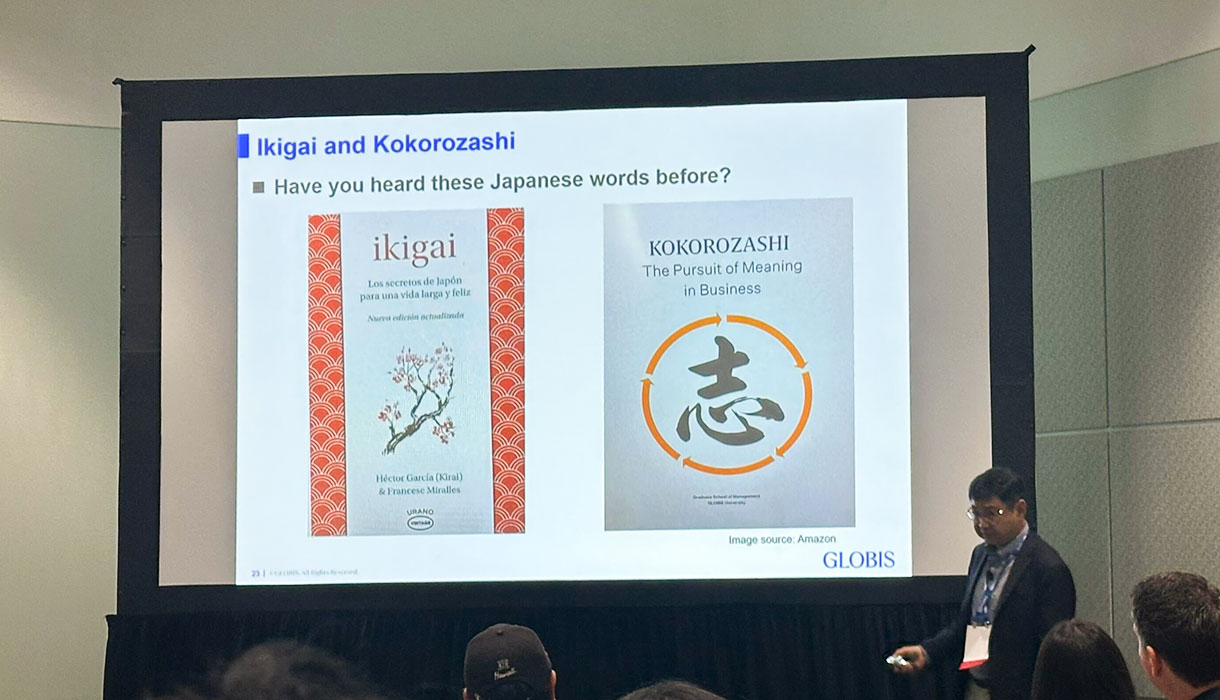
Ikigai has entered Western leadership vocabulary as a framework for individual fulfilment, built around the intersection of passion, skill, and personal meaning. As it has travelled globally, the element that carries its moral weight, the "for someone else," has largely been stripped away, leaving a concept that answers what makes your life feel worthwhile without asking what you owe to others.
Kokorozashi begins at that boundary. Typically translated as "personal mission," it describes a commitment rooted in your own values and directed outward, toward a better society rather than personal satisfaction, and the question it poses is what kind of world you are working toward, who benefits, and what you are willing to sustain in order to get there. Where Ikigai helps a person feel grounded, Kokorozashi gives them something to build toward, and in a BANI world that distinction functions as the difference between a framework and a compass.
GLOBIS ran two sessions on Kokorozashi in business at ATD: "Japan's Wisdom: A New Lens for Tomorrow's Leaders" by managing director Tomoya Nakamura, and "Leading with Compassion in an Isolated World" by senior faculty director Tadahiro Wakasugi, both drawing predominantly non-Japanese audiences.
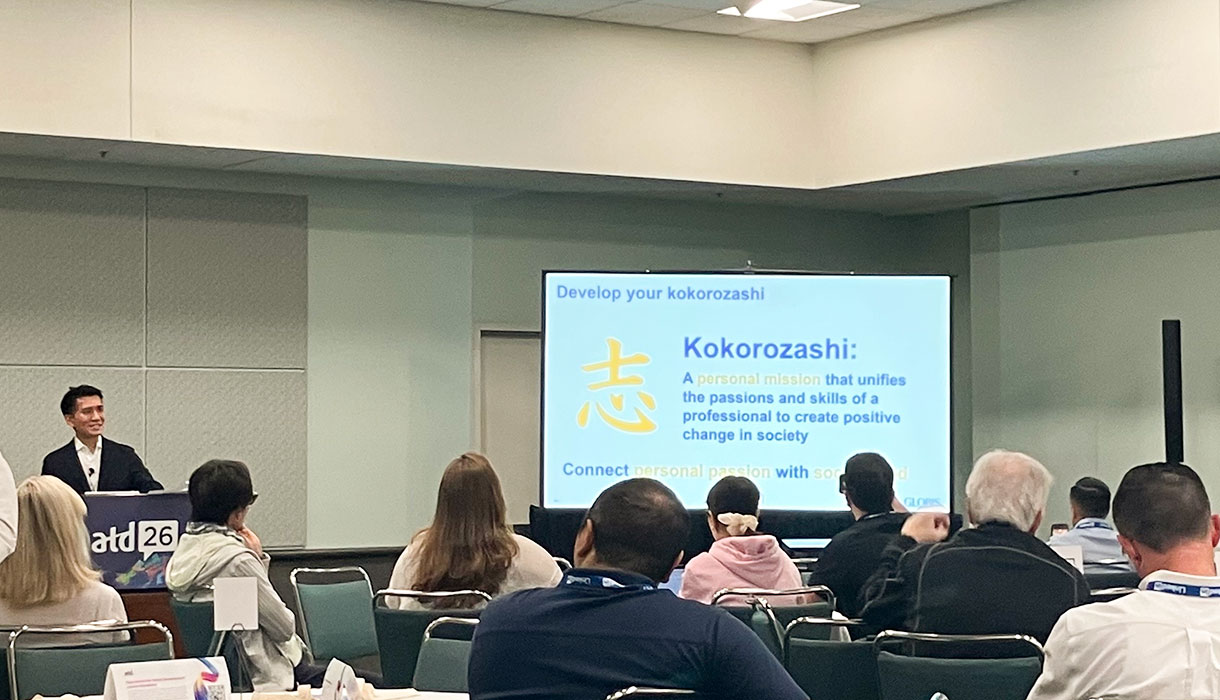
During Mr Wakasugi's session, one participant reflecting on her personal mission began to cry, having connected the exercise to her family and to the gap between where she spent her time and what she genuinely cared about. An American man working at a Japanese company said he wanted more conversations about our mission with colleagues inside his organization.
In a conference full of rigorous ATD 2026 leadership sessions that could describe the darkness without pointing beyond it, both responses point at the same thing: people are seeking a way back to themselves.
At a closed executive forum during ATD, Japanese business leaders managing predominantly American organizations spoke candidly about the tensions of leading across cultures: adhering to management principles under pressure to compromise, building genuine human trust while grounding leadership in their Japanese identity, and maintaining global awareness while executing locally. The consistent thread through those conversations was that acting from Kokorozashi, a personal mission rooted in long-term values rather than short-term outcomes, is what makes those tensions navigable.
Kokorozashi is not a quarterly objective or a branded value statement. It is a long-term commitment to societal contribution that predates any particular role or organization, and one the 知命社中 (Chimeishachu) executive program has helped more than 400 senior executives develop through sustained practice.
ESADE's Ivan Bofarull, after co-delivering a Tokyo immersion with GLOBIS centred on personal mission practice, called it "one of the best experiences by far" of the programmes he has designed worldwide.

The GLOBIS sessions at ATD worked not because Kokorozashi is unfamiliar to a global audience but because organizations almost never create the conditions for this conversation. Both were structured invitations to name what participants actually value and connect it to something beyond their career trajectory, and the fact that both sessions filled with non-Japanese practitioners suggests the need is not culturally specific.
For L&D teams looking to embed purpose-driven leadership into organizational practice, two practical starting points emerge:
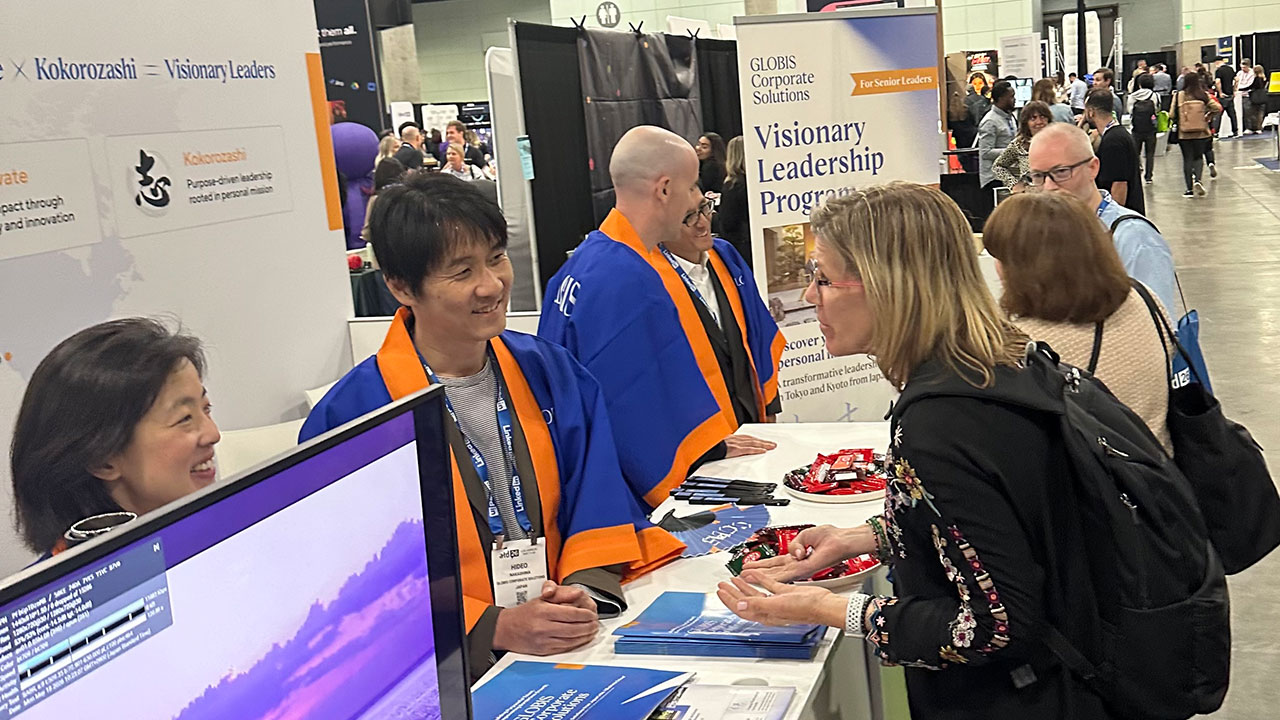
GLOBIS's Visionary Leadership Program, launching in October 2026, brings this approach to a global senior audience through a five-day intensive in Japan, incorporating case studies of successful Japanese companies, Zen sessions at Myoshinji temple, ikebana, and panel discussions with global business leaders.
The official theme of ATD 2026 was "Embrace Disruption, Direct the Future." What the conference revealed was how rarely anyone could say what direction was actually worth sustaining. Yosuke Inoue's addendum completes the thought: Embrace Disruption, Direct the Future with Kokorozashi.
Technology accelerates change; purpose-driven leadership L&D is what directs it, and organizations that invest in helping their people find and hold to that answer are not simply building better leaders. They are doing the only work that, in conditions this uncertain, actually holds.
More from this author: https://corporatesolutions.globis.com/articles/redefining-visionary-leadership
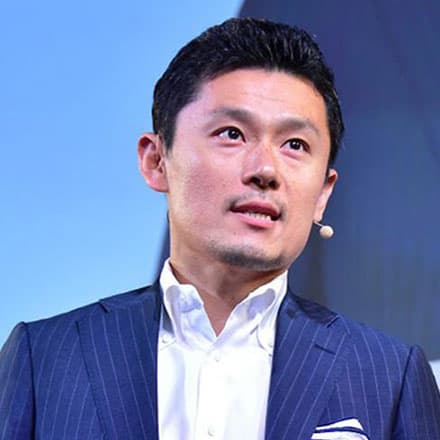
Yosuke Inoue
Managing Director at GLOBIS & Program Director of Visionary Leadership Program
Yosuke Inoue is a Managing Director at GLOBIS, leading the Branding & Marketing Department. He is the Program Director of the Visionary Leadership Program (VLP), a new executive education program for global leaders. He has extensive experience in corporate consulting, leadership development, and new business creation, and teaches leadership, creativity, and innovation at GLOBIS University.


Every organization's needs are different. With our global learning options, we're ready to help you find the right program to achieve your talent development goals.


