
The quality of a leader's decisions depends on the integration of body, mind, and spirit. That is the premise behind Dō, Zen, and Wa — three principles at the heart of Japanese management philosophy.
I have been on the mat for 41 years — five dans, three black belts — and I have run businesses across the United States and Japan for two decades. Aikido taught me something no case study ever did: the state of your body in a high-stakes moment determines whether you can think at all. A failed ukemi — a breakfall — can mean serious injury or death, so the practice forces total concentration: body, mind, and spirit functioning as one. Once you have trained in that environment, making business decisions under uncertainty feels manageable. At least nobody is getting seriously injured.
This is what separates Japanese management thinking from Western management theory. It is why visiting Japan can give you an opportunity to reflect on your own leadership. And if you were to master Do, Zen and Wa (which we will explain in the following paragraphs), you can think of your team and your organisation first.
Dō runs through every Japanese practice that takes itself seriously: tea ceremony, ikebana, calligraphy, martial arts. It holds that skill in any field emerges from the integration of mind, body, and spirit over time. You cannot refine your craft without refining yourself.
This matters because most executive programmes in business schools operate in a narrower mode. They train the mind through decision frameworks and strategic analyses. The body carries the leader between meetings, the spirit is handled on weekends or in therapy, the whole person never arrives at the table.
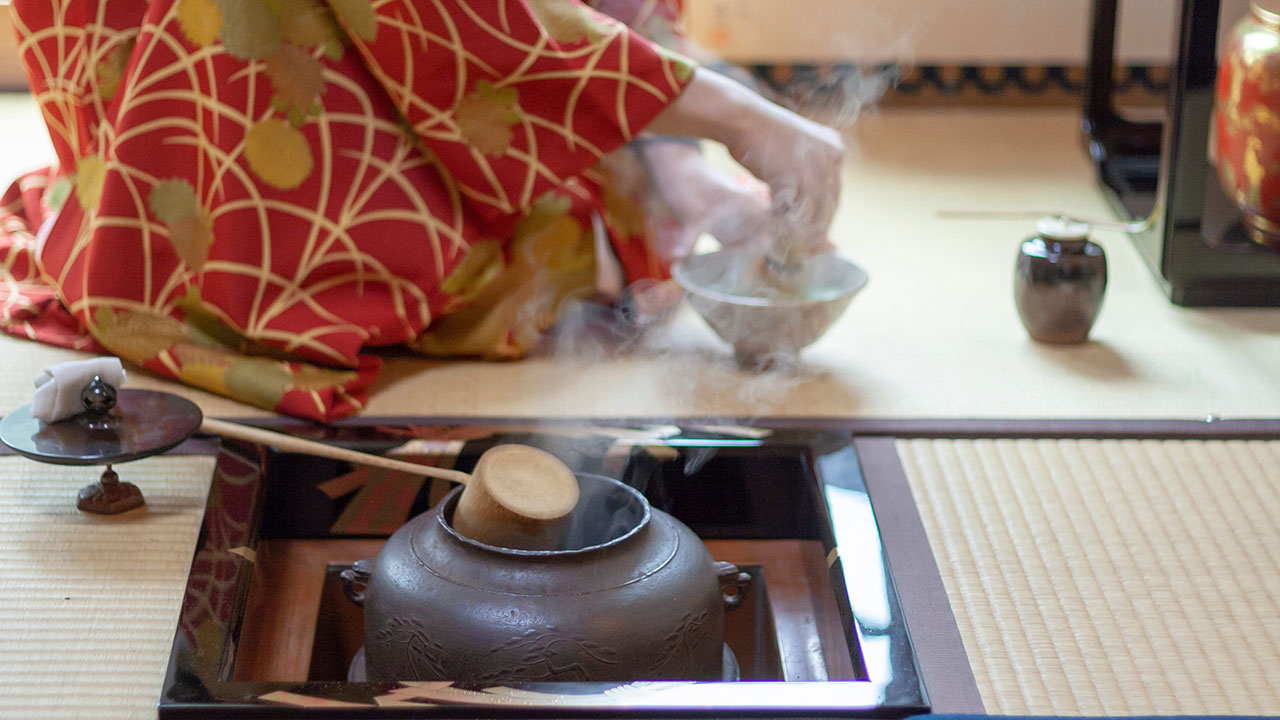
Zen teaches this: do fewer things. Get to the essence. Move the one thing that matters most. Zazen—seated meditation on a tatami mat—is the practice of sitting still long enough to unite body, mind, and spirit. When you reach that state, decisions become faster, not slower, because you are using your full capacity rather your brain alone.
This matters right now because global volatility is pushing leaders to decide faster with less information. The Silicon Valley instinct is "bias for action"—do many things at speed, fix the damage later. Zen teaches the opposite.
There is a famous quote often attributed to Abraham Lincoln, “Give me six hours to chop down a tree and I will spend the first four sharpening the axe”. That is a Zen framework in action. But what if the task if not just cutting down one tree, but rolling out an AI tool to 20,000 employees by end of quarter?
A good leader should spend the first 48 hours just sitting with the technology. Play with it, learn where it breaks and understand its strengths and its weaknesses before committing the organisation. The alternative — procurement before comprehension — is what most AI rollouts look like right now, and most of them disappoint.
Wa is where Western readers go wrong most often. Harmony sounds like consensus, politeness, the suppression of disagreement. In practice, Wa requires more honesty than most organisations can sustain. An organisation where people are afraid to speak is fragile. Genuine Wa requires enough relational trust that difficult information travels upward without punishment, and enough discipline at the top to receive it without retaliating.
Sanpo-yoshi — good for seller, buyer, and society — is how Japanese companies justify protecting employment through downturns. Western analysts call it inefficiency. Japanese executives call it the reason their supply chains don't betray them when the cycle turns.
To see what Wa looks like as a design principle, consider the Lexus IS. Inside the car, the interior panels are made of forged bamboo. Bamboo absorbs moisture well, which makes it a practical material for a car interior. But bamboo also needs to be periodically cut back to keep groves healthy, and those groves are concentrated in Japan's rural areas, where decades of depopulation have left elderly residents with shrinking economic options. Harvesting the bamboo gives those residents skilled, paid work. The forest stays healthy and the driver gets a better car.
Toyota calls this ordinary business. What it actually represents is Wa applied across three relationships simultaneously: nature, people, and machines. In any other automotive market, sourcing a premium material specifically to sustain elderly employment in a depopulated region would be considered an unusual act of social responsibility. At Toyota, it is how the thinking works.

Japanese organisations develop people differently than Western firms. Employees grow fastest in No. 2 and No. 3 roles, learning to think as their leader thinks, practising a communication discipline called Ho-Ren-So: reporting, communicating, consulting. When leaders are selected, Japanese organisations weigh personality, character, and values alongside technical management skill. The whole person matters because the operating system depends on it.
This logic converges with recent Western leadership theory. Jim Collins's Level 5 Leadership calls for personal humility fused with fierce professional will. The hardest part for most leaders is the humility, and the Japanese tradition, through Dō, offers a structured way to get there. Otto Scharmer from MIT describes Theory U as a journey from reactive "downloading" through open mind and open heart to one of “presencing” — where the leader acts from awareness rather than reflex.
These models and the Japanese tradition arrived at similar conclusions from different starting points. Therefore, understanding the heart of Japanese Management gives you a clue on how to become a Level 5 Leader or reach a state of “presencing”.
The Japanese model for how depth is acquired is Shu-Ha-Ri: follow the form, break the form, transcend the form. Beginners imitate. Intermediates adapt once they have earned the right to. Masters move past the form because it has become instinct. Most competency frameworks describe what a master looks like and try to design backward. Shu-Ha-Ri tells you that skipping stages does not produce depth. It produces imitation.

If machines handle most cognitive tasks, where does human value at work come from?
Kokorozashi — 志, personal mission — describes the point where a person's skills, experiences, and values converge into a purpose directed outward. It differs from ikigai, which is personal fulfilment. Someone whose ikigai is growing bonsai has found meaning through a practice. Someone whose kokorozashi is revitalising a declining town through its annual bonsai festival has aimed the same skill at the world.
With a kokorozashi, leaders in Japan aspire to build a better society through co-prosperity with their entire value chain. This is how stakeholder capitalism has operated in Japan long before the term entered Western conference agendas.
AI will optimise for a given target with extraordinary precision. It cannot choose which target is worth pursuing, hold a team together through genuine uncertainty, or make the judgment call that sits outside any training set. The Japanese insistence that human growth drives company growth is a bet on where durable advantage now sits: in the capabilities that automation cannot replace.
Japanese management can be slow. It has been insular. Japan's consumer electronics industry lost ground to Apple and Samsung, and the country largely missed the platform economy that Alphabet, Microsoft, and Amazon built.
These are real failures. They are also not the failures most organisations are struggling with right now. The problems showing up in engagement data, in executive burnout, in strategies that optimise this quarter and hollow out the next five years — those are problems of meaning, of honesty inside organisations, of a leadership model that develops the mind and leaves the rest alone.
Dō says the leader is a whole person. Zen says get to the essence before you move. Wa says the organisation is a web of relationships, and you cannot damage one strand without weakening the rest.
Japan will give you an opportunity to reflect on your own leadership so that you can think of your team and your organisation first. The question is whether you are willing to sit still long enough to let it.
The leadership principles explored in this article connect closely with the themes of visionary leadership, including purpose, conviction, and the ability to lead through uncertainty. These ideas form the foundation of GLOBIS's Visionary Leadership Program, a five-day immersive experience in Japan designed to help senior professionals clarify their kokorozashi and strengthen their leadership impact in a rapidly changing world.
Learn more about the Visionary Leadership Program
.jpg&w=640&q=75)
Tomoya Nakamura
Managing Director of KIBOW Social Impact Investment
Tomoya Nakamura started his career at Marubeni Corporation. At GLOBIS University, Tomoya served as dean of the English MBA Programs while starting the global training business. He co-authored KOKOROZASHI: The Pursuit of Meaning in Business. Currently, Tomoya serves as managing partner of KIBOW Social Impact Investment Fund. Nakamura holds a total of three black belts in Aikido (Japanese martial arts).


Every organization's needs are different. With our global learning options, we're ready to help you find the right program to achieve your talent development goals.


.jpg&w=3840&q=75)


