
In Aikido, there is a counterintuitive lesson that many people take years to fully understand. If you stand in a fighting pose — weight forward, fists raised, ready to resist — a skilled opponent can topple you with minimal effort. Your rigidity becomes your vulnerability. But if you stand as though you are gently cradling an infant, weight centred, arms soft, attention outward rather than inward, something changes. You become remarkably difficult to unbalance. The Japanese have a saying for this: the soft is stronger than the strong.
I have spent my career trying to convince Western executives that this principle applies to leadership. Most are sceptical. They have been trained to associate strength with hardness — the decisive voice, the competitive instinct, the quarterly target met without sentiment. Compassion, in that mental model, is what you make time for after the numbers are in.
So before I argue with them, I show them a number.
There are 33,076 companies in Japan that are more than 100 years old. That is around 41% of the world's total. The figure comes from successive surveys by Japan's Teikoku Databank, and it is not a rounding error. No other country comes close. If the conventional Western story about competition were complete — that aggression and ruthlessness are what keep a business alive — Japan should be an empty graveyard of polite firms. It is the opposite.
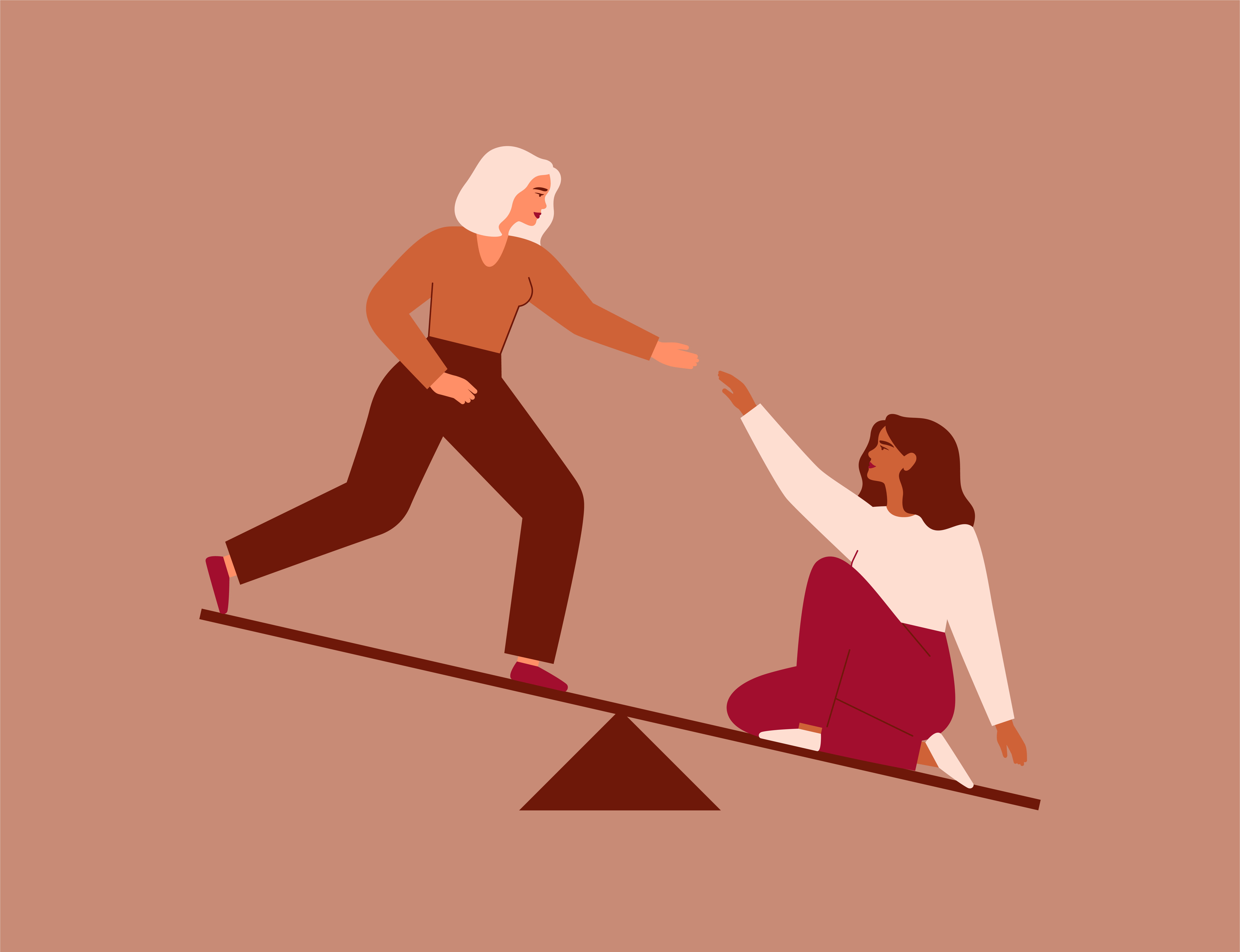
Most of the resistance I encounter is a translation problem. In English, "compassion" gets read as sympathy, or softness, or simply being nice. But consider what recent neuroscience actually shows: empathy and compassion are not the same thing. Empathy means resonating with someone's pain — feeling what they feel. Over time, that leads to exhaustion. Compassion is different. It means recognising suffering and responding with a genuine intention to help. Research shows it tends to sustain energy rather than deplete it.
I use a more practical definition, adapted from Stanford University's Compassion Cultivation Training framework: understanding ("I cognitively grasp what you are dealing with"), empathy ("I feel some of it with you"), and motivation ("I want to do something about it").
So to a CEO who sees compassion as a luxury they cannot afford in 2026 — you are probably thinking of empathy. And you are right that absorbing everyone's pain is not sustainable. But compassion operates differently. It doesn't pull you under. If anything, it supports steadier judgment and more consistent action.
The 2025 Edelman Trust Barometer found that among people who hold a sense of grievance about business and government — 61% of respondents globally — 65% said compassion earns influence, compared to only 48% who said power does. Your employees are walking into work carrying that grievance. A leadership model built on hierarchy and pressure does not merely feel anachronistic in this environment. It actively erodes the trust organisations depend on to function.
There is research on what power does to the human mind that makes uncomfortable reading. In a now-classic study, social psychologist Adam Galinsky and colleagues asked participants to draw the letter "E" on their own forehead. To make it readable to someone facing you, you have to mentally flip it — to step outside your own perspective entirely. People primed to feel powerful were significantly more likely to draw the E legible only to themselves, with no thought for the reader on the other side.
The higher you climb, the harder it becomes to see the room from anyone else's chair. Compassion is the discipline of learning to flip the E.
Ina Food Industry is a 500-person manufacturer in Nagano that turns seaweed into agar. By conventional measures, it is unremarkable. By any measure of sustained performance, it is extraordinary: 48 consecutive years of profit growth, a record Toyota itself cannot match, and a reputation that has drawn executives including Toyota Chairman Akio Toyoda to Nagano to study how it is done.
The architect of that culture, Chairman Hiroshi Tsukakoshi, built it around a philosophy he calls Tree Ring Management. As tree rings grow steadily outward from a single centre, the business grows from one mission: making employees happy. Profit is the result of that outward growth, not the origin of it. On a new employee's first day, Tsukakoshi shows them a 100-year calendar. "Somewhere on it," he tells them, "you will find the date of your death. It is undoubtedly there." The calendar hangs in every meeting room — a daily invitation to ask what it means to use a life well. Each morning, around 200 employees gather voluntarily at 7:30 a.m. to tend the company's nine-hectare garden together. No one is asked. No one is paid extra.

Marie Kondo loved tidying from childhood. But the insight that became the KonMari Method arrived at 17, when she stopped asking "What should I discard?" and started asking "What do I want to keep?" Each object is held against a single question: does this spark joy? The shift sounds minor. It transforms the emotional experience of the entire process.
What Kondo discovered later was that the method was doing something she had not designed it to do. A college friend, tidying her bookshelves, found she had kept only books on social welfare — a realisation that reconnected her to a teenage habit of volunteer babysitting she had forgotten entirely. She left her tech job and founded a childcare business. As Kondo began hearing versions of this story repeatedly, her understanding of what she was offering shifted: the method was a vehicle for helping people remember what they cared about. Psychologist Adam Grant ran a version of this experiment at a university fundraising call centre. When burned-out staff spent just 20 minutes reading letters from students whose scholarships their work had funded, donations increased 2.4 times. The job had not changed. The connection to whose life it touched had.
The company I think about most was founded in Osaka in 578 CE — roughly a century after the fall of Rome — when a Korean carpenter named Kongō Shigemitsu was brought to Japan to build Shitennō-ji, the country's first Buddhist temple. His descendants ran the firm for 40 generations across 1,428 years, until a prolonged real estate slump forced liquidation in 2006. It now operates as a subsidiary of the Takamatsu Construction Group, still building and restoring temples with the same techniques.
Kongō Gumi carpenters have a practice of hiding a small wooden tag, inscribed with their own name, somewhere inside each temple they build. Two or three hundred years later, when the next generation dismantles the structure for restoration, they find it. One carpenter described the logic plainly: "Our work isn't something that shows its true value right away. Only after 200 or 300 years will people realise it was done well." Research by Lisa Zaval and colleagues at Columbia found that prompting people to reflect on how they would be remembered by future generations made them 45% more generous toward those generations in real economic decisions. Long-horizon thinking and compassion train the same capacity.
The question each case leaves open is the same: how do you build this orientation deliberately, rather than waiting for culture to do it by accident? In the Japanese tradition, the answer begins with kokorozashi — written with a character that fuses the concepts of "warrior" and "heart." It is a personal mission: the point where your particular skills, experiences, and values converge toward something larger than your own interests.
But before that — before you begin thinking about building a compassionate company — there is a more fundamental question worth sitting with: are you being compassionate toward yourself?
The entrepreneurial path involves failure, criticism, loneliness, and uncertainty not as occasional setbacks but as part of the process. Many founders feel they cannot afford self-compassion. When things go wrong, self-criticism feels like the responsible response — like discipline. But the research points the other way. Self-criticism tends to narrow thinking, keep you stuck in rumination, and gradually wear down the quality of your decisions. Leaders with higher self-compassion recover from setbacks more steadily and engage with difficult realities more honestly.
There is also a deeper structural reason to care about this. The culture you build will reflect how you treat yourself. A leader who practices self-compassion tends to create an environment where people feel safe enough to do their best work — and that is a reasonable foundation for resilience.
The fighter's stance — rigid, forward-weighted, defended — feels like strength. Against a direct frontal challenge, it might even function as strength. But it cannot absorb what it does not anticipate, and it has no peripheral awareness because it has narrowed everything down to the threat directly ahead.
The compassionate stance looks different. Arms extended, weight balanced, attention spread outward — it is attentive to what the person in front of you is actually carrying, not merely what they appear to be doing. It can absorb, redirect, and respond without losing its centre.
The longest-lived organisations in human history were not built by people who held the fighting pose. They were built by people who understood that endurance requires a different kind of strength — one that looks, from the outside, like softness, and functions, across centuries, like bedrock.
The leadership principles explored in this article connect closely with the themes of visionary leadership, including purpose, conviction, and the ability to lead through uncertainty. These ideas form the foundation of GLOBIS's Visionary Leadership Program, a five-day immersive experience in Japan designed to help senior professionals clarify their kokorozashi and strengthen their leadership impact in a rapidly changing world.
Learn more about the Visionary Leadership Program
Tadahiro Wakasugi
Professor and Director at GLOBIS University
Dr. Tadahiro Wakasugi is Senior Faculty Director at GLOBIS, specializing in leadership and compassion. A former Booz & Company (now PwC Strategy&) consultant, he serves as Director of the Japan Positive Psychology Association and Independent Director of Prored Partners. He blends Eastern wisdom as a compassion teacher and Buddhist priest.


Every organization's needs are different. With our global learning options, we're ready to help you find the right program to achieve your talent development goals.


.jpg&w=3840&q=75)


