
Toyota has adapted its management philosophy across generations while preserving its founding convictions. Its experience offers valuable lessons for leaders seeking to lead change while staying true to the principles that guide their organizations.
Kaizen. The Japanese term for continuous improvement has become familiar to business leaders around the world. Practicing it asks something difficult of leaders: a willingness to question established ways of working, including those that have already helped make their companies successful.
Toyota has returned to that challenge across generations. The company that helped popularize kaizen has continued to revise how it teaches and applies its own management philosophy. Its experience raises a question for leaders today: how do you change the way an organization works while preserving the convictions that guide it?
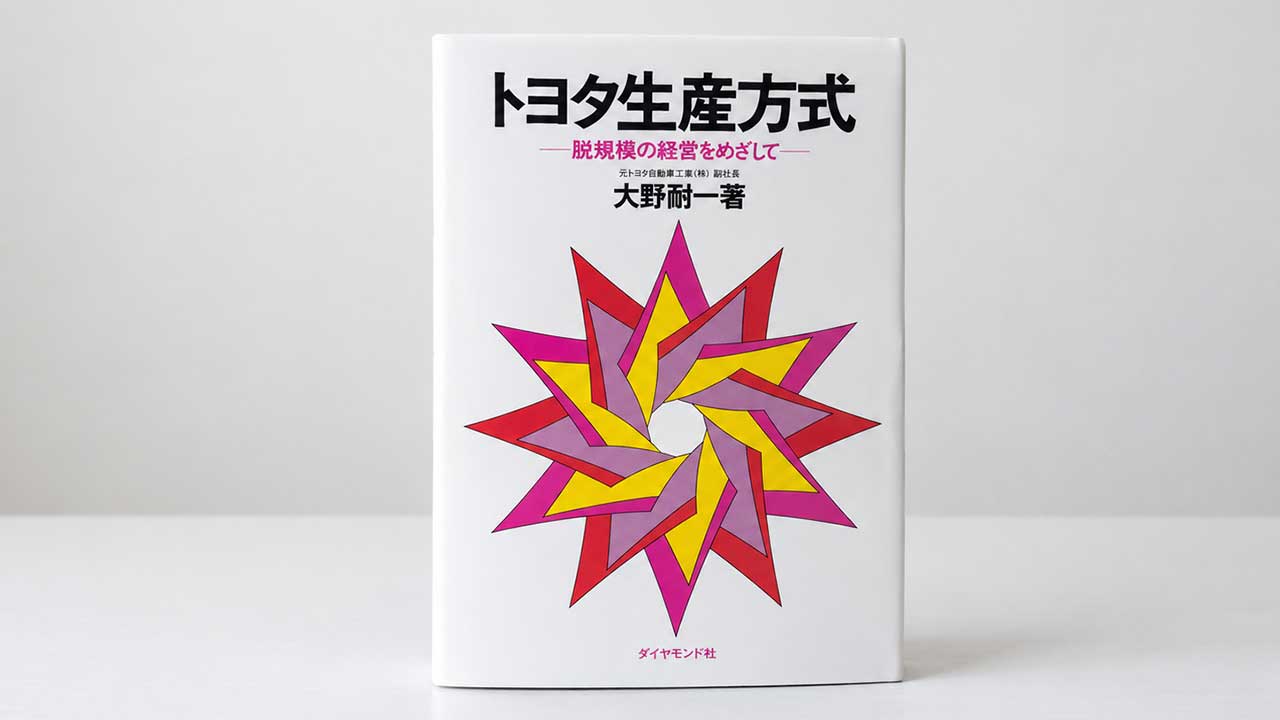
The Toyota Production System (TPS) provides a starting point. As Toyota and other Japanese manufacturers gained a reputation for productivity and competitiveness, business leaders took an interest in the methods behind their success. Taiichi Ohno, then Vice President of Toyota Motor Corporation, helped develop TPS and put it into practice. In his book, トヨタ生産方式(Toyota Production System), he explained the principles behind its pursuit of the complete elimination of waste, or muda, in manufacturing.
Both practices depend on people who can recognize problems and find better ways to work. Underlying this is the conviction that improvement never ends, and that people have the creativity to keep pursuing it – if you trust them to do so.

Kaizen is the act of identifying the gap between the "ideal state" and the "current state” and taking measures to bring the current state closer to the ideal. This habit of examining how work could improve is central to Toyota’s approach.
In any business, there is always an ideal state to strive for. As the external environment changes, that ideal also shifts. Achieving one goal therefore leaves further work to do. A dedication to continuous improvement requires people to keep examining both their methods and the goals those methods serve.
Ohno pointed out that "when circumstances change, it is only natural to change our methods. What matters most is building a workplace that can adapt to change, and keeping our own minds flexible." He also noted, "The crucial element is not the system itself, but the human creativity to select and interpret information."
Ohno famously drew inspiration for TPS from American supermarkets. Just as customers take what they need from the shelves, one production process could collect the parts it needed from the preceding process. Replenishing those parts as workers used them helped organize production around demand.
Toyota extended these principles beyond the manufacturing floor into other business domains. As its operations grew, the company needed to help employees across countries and functions understand how to apply them.
Its global expansion brought manufacturing plants, sales offices, and research and development hubs into an increasingly diverse organization. In 2001, Toyota turned the working methods and knowledge it had long passed on through experience into explicit, shared guidelines: the Toyota Way 2001.
Toyota formalized these as shared values and business methods for all employees, including those in administrative functions.
Toyota established the Toyota Institute in January 2002 to help employees apply these principles. Then-President Fujio Cho served as its first president, placing leadership development and practical training at the center of the effort to share the Toyota Way.
From 2003 onward, I had the privilege of collaborating on projects with the Toyota Institute for several years, supporting its initiatives to embed the Toyota Way across the company. During this time, I saw how readily employees used its principles to communicate about their work, from the frontline to top management.
The institute helped turn continuous improvement and trust in people into subjects for leadership development and practical training. Employees across functions and regions could build a shared understanding of what those principles required of them.
The Toyota Way 2001 acknowledged that the company's philosophy would need to evolve with the business environment. Toyota followed through on that commitment with the Toyota Way 2020.
Connected and autonomous technologies, shared mobility, and electrification were transforming the automotive industry. The Toyota Way 2020 reflected Toyota's ambition to transform itself into a mobility company.
Toyota Way 2020 / Toyota Code of Conduct
These guidelines carry forward the foundational values Toyota has cherished since Ohno’s era: continuous improvement and trust in people.
“Act for Others” deserves particular attention. Toyota explains it through attention to customers and stakeholders in everyday work. One possible interpretation is that the company cannot define its ideal state simply by looking at competitors. It must also consider what the people who rely on it need and expect.
That perspective gives continuous improvement a direction. As customers' needs change, Toyota must reconsider what it should strive for and how to achieve it. The effort to close the gap between the current and ideal states continues.
If Toyota has continuously adapted its management philosophy to changing business environments, what has remained constant?
The Five Main Principles of Toyoda offer an answer. Published in 1935, they summarized the core beliefs of Sakichi Toyoda, the founder of the Toyota Group. They encouraged creativity, practicality, and contribution to society, convictions that would guide successive generations.
Toyota traces Sakichi's determination to improve people's lives to his mother's demanding weaving work. His efforts to ease that burden led to loom inventions that laid the foundation for jidoka. A concern for the person doing the work took practical form in machines that could detect problems and stop.
TPS translated those convictions into manufacturing practices. The Toyota Way 2001 translated them into shared organizational values. The Toyota Way 2020 reinterpreted them for an era of technological and societal change.
This ability to preserve fundamental beliefs while finding new ways to practice them may be one of Toyota's greatest sources of long-term competitive advantage.
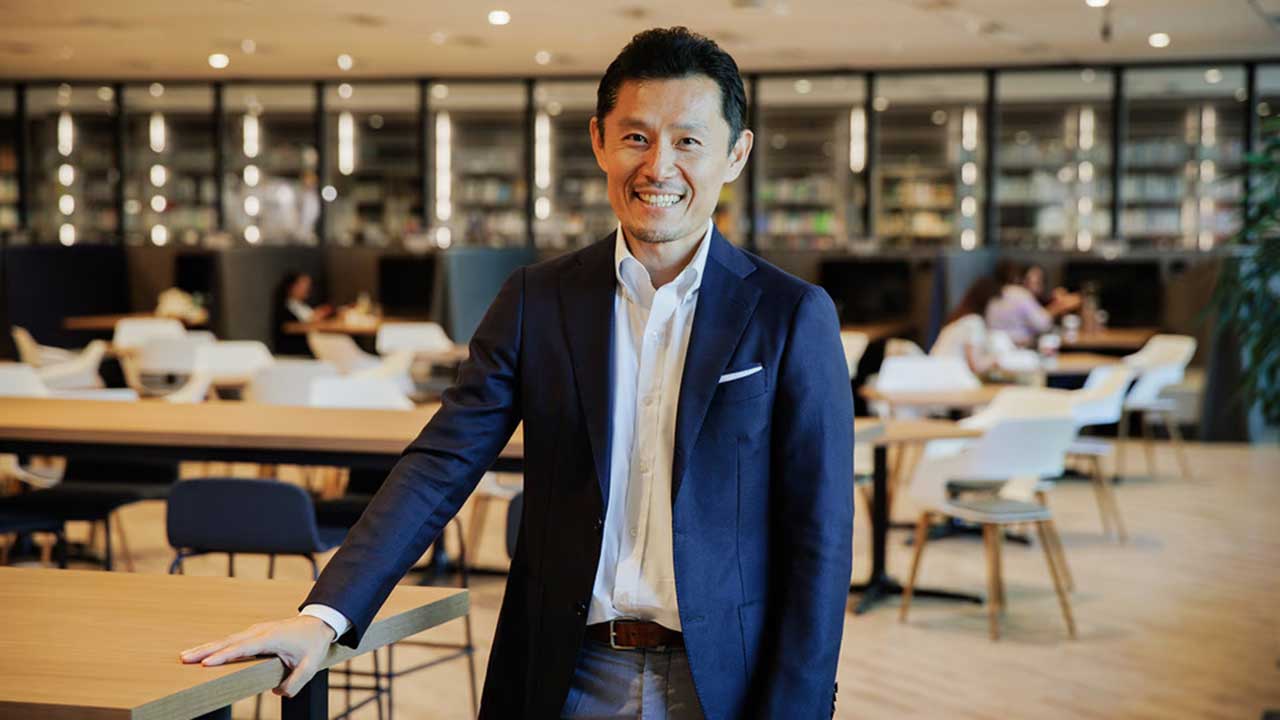
When I reflect on my years working with Toyota’s people, what left the deepest impression on me was their relentless, sometimes messy struggle to keep their core convictions alive while everything around them was changing.
I believe that, ultimately, the Toyota Way leads back to the Five Main Principles of Toyoda. This raises important questions for every organization: What convictions define it? Do employees understand and share them? And as the business changes, do leaders give those convictions meaning through their everyday decisions?
These questions have no simple answers. They require reflection, dialogue, and the willingness to challenge our own assumptions.
Toyota’s history reminds us that sustainable leadership is not built by simply adopting the latest management tools. It is built by continuously renewing the convictions that give those tools meaning.
The future of leadership will not be defined by the next management tool, but by the convictions that leaders choose to preserve—and the courage to reinterpret them for a changing world. I hope this article serves as an invitation—not only to learn from Toyota’s journey, but also to reflect on the convictions that will shape your own.
If exploring the legacy of the Toyota Way has sparked your interest in defining your own core principles, that is precisely the purpose of the GLOBIS Visionary Leadership Program (VLP)
The VLP gives senior leaders space to examine the convictions that guide their decisions and consider how to sustain them through change.
Through dialogue with global peers, immersive experiences in Tokyo and Kyoto, and discussions grounded in Japanese management philosophy, the program encourages participants to define their own kokorozashi: a personal mission that can guide organizational transformation and long-term value creation.
Visionary leadership is shaped not only by strategy and vision, but also by the values and philosophies that guide leaders through uncertainty.
Yosuke Inoue
Managing Director at GLOBIS & Program Director of Visionary Leadership Program
Yosuke Inoue is a Managing Director at GLOBIS, leading the Branding & Marketing Department. He is the Program Director of the Visionary Leadership Program (VLP), a new executive education program for global leaders. He has extensive experience in corporate consulting, leadership development, and new business creation, and teaches leadership, creativity, and innovation at GLOBIS University.


Every organization's needs are different. With our global learning options, we're ready to help you find the right program to achieve your talent development goals.


